


Explore Chile with a 4x4 Truck Camper – Adventure from the Atacama to Patagonia
Chile is a country made for travelling by 4x4 truck camper. Stretching more than 4,000 kilometres between the Pacific Ocean and the Andes, this long and narrow country offers an extraordinary variety of landscapes. In the north, the endless expanses of the Atacama Desert await, while central Chile is characterised by wine regions, fertile valleys and vibrant cities. Further south, volcanoes, deep-blue lakes and dense forests eventually give way to the wild mountain landscapes of Patagonia. Travelling through Chile with a 4x4 camper is a particularly intense way to experience these contrasts. Instead of following a rigid itinerary, the landscape sets the pace. A lonely gravel road may lead to a turquoise lagoon, a snow-capped volcano might appear around the next bend, and in the evening your camper could be parked somewhere between mountains, steppe and a crystal-clear river.Chile is not a destination for travellers in a hurry. The distances are enormous – and that is part of its appeal.
Why explore Chile with a 4x4 truck camper?
A conventional motorhome is suitable for many regions of Chile. However, travellers who also want to explore more remote areas will clearly benefit from a robust 4x4 truck camper. Particularly in the north and Patagonia, many interesting routes include gravel roads. Even along the famous Carretera Austral, paved sections alternate with ripio – the term commonly used in Chile for gravel roads. A 4x4 truck camper combines two major advantages: the off-road capabilities of a pick-up truck with the independence of a camper. Your bed, kitchen and personal equipment travel with you, while increased ground clearance and four-wheel drive provide additional possibilities on more demanding routes. However, this does not mean that every track can or should automatically be driven. Weather conditions, road conditions, rental terms and local driving restrictions must always be taken into account. Especially in remote regions, adventure should never be confused with recklessness.
Chile’s most beautiful regions and attractions
San Pedro de Atacama – landscapes from another planet
In northern Chile, the Atacama is one of South America’s most extraordinary landscapes. San Pedro de Atacama is the ideal base for exploring the desert and the Altiplano. Some of the best-known attractions include Valle de la Luna with its bizarre rock and salt formations, the high-altitude lagoons of the Altiplano, the region’s salt flats and the El Tatio geysers. Those who travel to the geysers early in the morning can experience the volcanic activity at its most impressive. El Tatio, however, lies at an altitude of more than 4,000 metres. Travellers should therefore gradually acclimatise to the altitude and give their bodies sufficient time to adjust. The exceptionally clear nights are another highlight of a journey through the Atacama. The dry air, high altitude and low levels of light pollution create excellent conditions for observing the night sky.
The Altiplano – the wild side of northern Chile
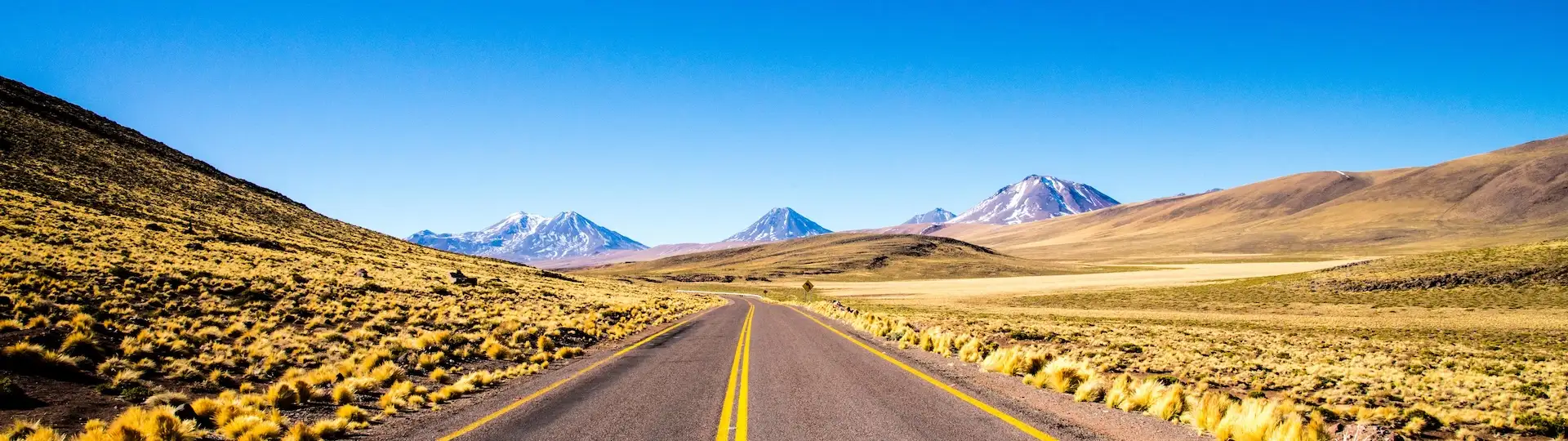
A 4x4 journey becomes even more spectacular when leaving San Pedro behind and heading into the higher regions of the Andes. Volcanoes, salt lakes, flamingos, barren plateaus and seemingly endless landscapes dominate the scenery. Some roads run for kilometres through virtually uninhabited terrain. This is exactly where a 4x4 truck camper demonstrates its strengths. At the same time, travelling through the Altiplano requires careful planning. Fuel, drinking water, food and warm clothing should be replenished well in advance. Altitudes well above 3,000 metres are common, and temperatures can fall dramatically after sunset.
Santiago and central Chile
After the extreme landscapes of the north, central Chile almost feels Mediterranean. Santiago lies between the Andes and the Coastal Range and is an excellent starting point for journeys into different parts of the country. From here, travellers can easily reach both the Pacific coast and the wine regions south of the capital. The Maipo Valley, Colchagua and other renowned wine-growing areas are particularly interesting. Those with enough time should also plan a visit to Valparaíso. The port city is famous for its colourful houses, steep hills, historic funiculars and street art. When travelling with a truck camper, however, it is advisable to choose a suitable campsite or parking location outside densely built-up city centres for urban sightseeing.
Chile’s Lake District – volcanoes, forests and hot springs
South of central Chile, the landscape changes once again. Around Pucón, Villarrica, Puerto Varas and Lake Llanquihue, lakes, forests and snow-capped volcanoes dominate the scenery. Villarrica Volcano is one of the region’s most famous landmarks. Around Pucón, travellers will also find hiking trails, hot springs, rivers and numerous outdoor activities. Further south, Puerto Varas, with views towards the Osorno and Calbuco volcanoes, is an ideal base for exploring the Lake District. This region is particularly enjoyable for camper travellers. Distances between attractions are more manageable than in the north, while campsites and tourist infrastructure are comparatively well developed.
Chiloé – a completely different side of Chile
The island of Chiloé is a rewarding detour on the journey south. Its landscape and culture are noticeably different from mainland Chile. Green hills, rugged coastlines, small fishing villages and characteristic wooden churches shape the scenery. The colourful palafitos – traditional houses built on wooden stilts – are another well-known feature of the island. Chiloé is a place where travellers automatically slow down. The weather is part of the experience: sunshine, clouds and rain can alternate surprisingly quickly.
The Carretera Austral – a dream road for 4x4 campers
For many camper travellers, the most adventurous part of a Chilean road trip begins south of Puerto Montt. Ruta 7, better known as the Carretera Austral, stretches for more than 1,200 kilometres through the wild landscapes of northern Patagonia. It connects remote settlements, national parks, glaciers, fjords, rivers and lakes. Highlights along the route include Pumalín National Park, the area around Futaleufú, Queulat National Park, Coyhaique, Cerro Castillo and Lake General Carrera. One particularly fascinating natural attraction is the Marble Caves – Capillas de Mármol – on Lake General Carrera. Over thousands of years, the water has carved spectacular shapes into the marble. The Carretera Austral is not a road to rush through. Spontaneous stops are one of the things that make this journey so special. Gravel, potholes and changing road conditions remain part of everyday travel on some sections. Several ferry crossings are also an integral part of the route. During the main travel season, it is advisable to plan or reserve important ferry connections in advance.
Patagonia – at the end of the world
The further south you travel, the more dramatic the landscape becomes. Patagonia means endless steppes, imposing mountain ranges, glaciers, turquoise lakes and a sky that seems to have no end. Distances are vast, settlements are small and the wind can reach impressive speeds. At the same time, travelling through Patagonia is one of South America’s most intense road trip experiences. A 4x4 truck camper provides exactly the right feeling here: the freedom to travel independently while always having a small, protected home with you.
Torres del Paine – the icon of Patagonia
Torres del Paine National Park is one of the great natural highlights of any journey through Chile. The distinctive granite towers of the Torres, the Cuernos del Paine, Grey Glacier and lakes such as Pehoé and Nordenskjöld create scenery that can almost seem unreal. Guanacos are commonly seen, while condors can also be spotted with a little luck. Pumas live in the region as well, although encounters are naturally much less frequent. The national park offers numerous possibilities for hikers – from short walks to viewpoints to multi-day trekking routes such as the famous W Trek. The weather in Patagonia can change dramatically within a short period of time. Sunshine, rain and strong winds can sometimes all be part of the same day.
Best time to visit Chile by camper
Due to its enormous north-south extension, Chile does not have one single ideal travel season. The best time to visit depends primarily on the regions you intend to explore.
Northern Chile and the Atacama
The Atacama can generally be visited throughout the year. Days are often sunny and dry, while nights – particularly at higher altitudes – can become extremely cold. The transition seasons of the South American spring and autumn are particularly attractive for travelling through the Atacama and Altiplano. However, seasonal weather patterns in the highlands can affect road conditions.
Santiago and central Chile
Central Chile has a predominantly Mediterranean climate with dry, warm summers and wetter winters. Spring and autumn are particularly attractive for camper journeys. From October to November and from March to April, temperatures are generally pleasant and many regions are less busy than during the main holiday season.
Lake District and Chiloé
The best travel period is approximately from November to March. However, rain is possible at any time, even during summer. Flexible travellers with good waterproof clothing will quickly appreciate the combination of water, clouds, deep-green forests and volcanic landscapes.
Carretera Austral and Patagonia
For the Carretera Austral and the far south, the South American summer is the main travel season. From December to March, the days are long and climatic conditions are generally at their most favourable. This is also the most popular travel period, so ferries, campsites and particularly sought-after activities may need to be booked well in advance. November and April can also be interesting for experienced and flexible travellers, although more changeable weather and reduced tourist services should be expected.
Climate and weather in Chile
Chile encompasses several completely different climate zones. In the north, the extremely dry desert climate of the Atacama dominates. Rainfall is exceptionally rare in many areas, while temperature differences between day and night can be considerable. Central Chile has a Mediterranean climate. Summers are predominantly warm and dry, while much of the annual rainfall occurs during winter. Further south, conditions become increasingly humid. The Lake District and Chiloé receive considerably more rainfall, which explains their lush forests and intensely green landscapes. Patagonia, finally, is famous for rapidly changing weather and strong winds. Even during summer, warm clothing, wind protection and a waterproof jacket belong in your luggage. Anyone travelling through Chile by camper should therefore pack not only for different landscapes, but practically for several seasons.
Practical tips for travelling by 4x4 truck camper
Chile’s main north-south routes are generally well developed. However, once you travel into more remote areas, distances between fuel stations and other services can become considerable. The rule is simple: in sparsely populated areas, it is better to refuel too early than too late. Drinking water and food should also be carried with sufficient reserves. Offline maps are a useful addition, as mobile phone coverage cannot be taken for granted in remote regions. Speed should be significantly reduced on gravel roads. Not only potholes but also loose stones can damage tyres and the vehicle. On longer journeys, it is also worth regularly checking tyre pressure and the general condition of the vehicle. Wind is another important factor, particularly in Patagonia. Take care when opening vehicle doors – powerful gusts can occur unexpectedly. And finally, never underestimate the distances in Chile. A route that appears manageable on a map can easily turn into many hours behind the wheel.
Chile by 4x4 camper – freedom across more than 4,000 kilometres
Chile is one of those countries where the journey between the attractions is just as much a part of the experience as the destinations themselves. Drive through a desert landscape in the morning, stand beneath a snow-capped volcano a few days later and eventually open the camper door to views of the mountains of Patagonia – few other destinations offer such dramatic contrasts within a single journey. A 4x4 truck camper offers an ideal combination of mobility, robustness and independence. With world-wide-wheels, you can book a suitable 4x4 camper or truck camper for Chile in advance and plan your personal journey through one of South America’s most fascinating countries. Whether it is the Atacama, the Lake District, the Carretera Austral or Patagonia, Chile does not offer just one dream route. Chile is the dream route.
Frequently asked questions about Chile – 7 FAQs
When is the best time to visit Chile by camper?
This depends on the region you plan to visit. Northern Chile and the Atacama can be explored practically all year round. Spring and autumn are particularly pleasant in central Chile. For the Carretera Austral and Patagonia, the best travel period is generally between December and March, when days are longer and weather conditions tend to be more favourable.
Do you really need a 4x4 camper in Chile?
Four-wheel drive is not essential for Chile’s main highways. However, travellers wishing to explore more remote areas, gravel roads, parts of the Altiplano or the Carretera Austral will benefit from the increased ground clearance and additional capabilities of a 4x4 truck camper. Rental conditions and the roads currently permitted by the rental company must always be observed.
How much time should I allow for a camper trip through Chile?
Around two weeks can be sufficient for individual regions. The Atacama, for example, can easily be explored as a trip in its own right. At least two to three weeks are recommended for the Carretera Austral. Travellers wishing to combine several regions of Chile should allow three to five weeks or more. Given the enormous distances, less can sometimes be more.
Can you camp freely in Chile?
The possibilities vary depending on the region. There are campsites, private camping options and remote areas where overnight stays may be possible. However, local regulations and restrictions apply in national parks, protected areas, cities and on private property. Travellers should respect signs, ask when in doubt and always protect sensitive natural environments.
Can the Carretera Austral be driven with a camper?
Yes. The Carretera Austral is actually one of South America’s most fascinating camper routes. Some sections are paved, while others consist of gravel. Ferry crossings are also part of the route. Weather and road conditions can change, so sufficient time reserves should be included in the itinerary. A robust vehicle is an advantage on this route.
How difficult is driving in Patagonia?
The main challenges are not heavy traffic but the vast distances, changing road conditions and sometimes very strong winds. Fuel should be replenished well in advance, and an appropriate speed is particularly important on gravel roads. Travellers who allow sufficient time and drive defensively can explore Patagonia very well on their own.
What should I take on a 4x4 camper trip through Chile?
Essential equipment includes clothing suitable for different temperatures, wind and rain protection, sun protection, sufficient drinking water and offline maps. Additional food and water reserves are advisable when travelling through remote regions. In the Altiplano, travellers must also be prepared for high altitudes and cold nights, while weatherproof clothing is essential in Patagonia even during the South American summer.
We have compiled a selection of route suggestions supporting you to explore Chile with a motorhome, 4x4 offroad-camper or campervan. Simply enter the desired departure date and you will be given the vehicle selection for the selected tour route. Motorhome rental in Chile made easy.
We have compiled a selection of route suggestions supporting you to explore Chile with a motorhome, 4x4 offroad-camper or campervan. Simply enter the desired departure date and you will be given the vehicle selection for the selected tour route. Motorhome rental in Chile made easy.